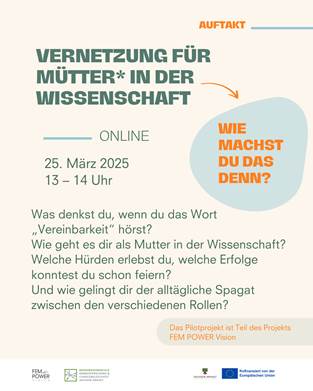
“Close the gap: Wie können Geschlechteraspekte stärker in der Forschung berücksichtigt werden?” Onlinediskussion mit Prof. Dr. Oliver Werz und Prof. Dr. Anna Kipp Moderation: Dr. Michael Wutzler online von 16-17 Uhr
Die Dominanz männlicher Perspektiven hat auch in der Wissenschaft dazu geführt, dass geschlechterspezifische Daten in vielen Bereichen der Forschung und der Gesellschaft unzureichend erfasst sind: Sei es bspw. bei der Wirkung von Medikamenten, den Arten der Fortbewegung, bei Sicherheitstechnologien oder der Altersvorsorge. Dabei führt Gendersensibilität zu einer höheren wissenschaftlichen Qualität und präziseren Ergebnissen, die auch in der Praxis zu besseren Anwendungen führen. Nicht zuletzt trägt gendersensible Forschung zu einer gleichstellungsorientierten gesellschaftlichen Entwicklung bei. Dahingehend hat sich in den letzten Jahren einiges getan.
There are free slots in this workshop offered by Leipzig University.
“In this workshop, we provide a space to pause and explore questions such as: What’s working well and what’s not? Which goals am I focusing on, and do they align with my priorities? What steps can I take to achieve the goals I’ve set? How can I manage expectations and demands in a healthy mental way? What are my sources of strength and what can I do to recharge?
We support you working on your individual topics in a structured and confidential atmosphere, introducing you to useful concepts, tools, and exercises. The exchange with colleagues brings you feedback and new ideas.”
Publishing your findings is an essential part of the research journey and a significant milestone in your academic career. When you publish your work, you gain recognition and the chance to connect with fellow researchers worldwide, fostering the exchange of ideas and contributing to the advancement of your field.
To support you in crafting high quality articles, Springer Nature is offering a series of highly informative sessions that will guide you through every stage of the publishing process.
21 October 2024: How to write a scientific paper?
22 October 2024: How do journals operate?
23 October 2024: Research integrity
24 October 2024: Benefits of open access and Springer Nature author journey
The third order for amendment of the doctoral regulation of Faculty of Medicine has been relased as new version (in German). The regulations came into force on August 28, 2024.
Promotionsordnung der Medizinischen Fakultät der Martin-Luther-Universität Halle-Wittenberg vom 07.05.2024
Leipzig University organizes a lecture series on career and everyday life in academia of postdocs. This time the topic is
Is doing a postdoc (still) the right thing for me?
In this interactive lunch lecture, you will learn how to assess your academic profile and identify your skills and strengths after completing your PhD. We will guide you through evaluating whether pursuing a postdoc is the right step for you and provide tools to help you decide if a professorship aligns with your career goals. Don’t miss this opportunity to gain clarity on your professional path and make informed.
The German Scholars Organization e.V. (GSO) provides information and answer questions about the Klaus Tschira Boost Fund. Who is the program designed for? What does it offer? What to consider when applying? How does the selection process work?
In the German academic system, Tenure Track is a relatively new concept. With a tenure track position, one gets the opportunity to immediately transition to a permanent position when successfully completing the probationary period (known as the tenure track phase). The majority of tenure track positions comes along with a professorship; less common and known are lecturer or researcher positions with tenure track.
The workshop combines Good Scientific Practice (Part 1) with Negotiation (Part 2). During your doctoral studies you will come into contact with other scientists and collaborate with them. Here negotiation skills can be helpful. This may even prevent potential conflicts with your supervisor.
Over the past few months, we have been working on an “equality opportunities” booklet to inspire young girls and women to study in the STEM field. To this end, our female doctoral students, student talents and principal investigators have reported on their experiences, their careers, their highs and their lows.
Take a look at their contributions or download the whole booklet via the following link:
The booklet has been published by the research training group “BEAM (RTG 2670): Self-Organization of Soft Matter via Multiple Noncovalent Interactions”.