““Press releases” are one of the main vehicles used by a communication office to inform the world about scientific advances. Naturally the results themselves should make a press release, but a few simple guidelines can help to make the release a success. Although the main target group for press releases is the press, press releases do reach further. Press releases communicate important information to decision-makers, other mediators, scientists and even to the public. It is critically important always to tailor the style, level and content of a press release to suit the needs of the press and not the secondary target groups mentioned.” (from ESA)
Der online durchgeführte Workshop richtet sich disziplinübergreifend an Antragsberechtigte für Forschungsprojekte und befasst sich schwerpunktmäßig mit dem neuen EU-Rahmenprogramm für Forschung und Innovation HORIZONT EUROPA (2021-2027) aber auch mit dazu assoziierten Programmen wie z.B. ERAnets. Ziel des Workshops ist die Vermittlung von Grundlagen zur Förderung von Forschungs- und Innovationsprojekten durch die Europäische Union. Dem Teilnehmerkreis werden die Europäische Forschungsförderlandschaft und ihre Förderinstrumente vorgestellt. Die Teilnehmenden lernen Voraussetzungen zur Beteiligung und die Einstiegsmöglichkeiten kennen. Sie bekommen einen Überblick über die relevanten Akteure und Institutionen. Es werden die Unterstützungsmöglichkeiten für EU-Antragsstellungen und -projekte an der MLU vorgestellt.
Sie haben sich nach Ihrem Studium für eine wissenschaftliche Karriere entschieden? Eine Promotion kann ganz schön herausfordernd sein. Gar nicht so leicht, dabei einen kühlen Kopf zu bewahren. Wenn neben der Promotion noch weitere Faktoren hinzukommen, die den Stress erhöhen, kann sich das auf Ihre Leistungsfähigkeit auswirken und auch den Erfolg Ihrer Promotion beeinflussen. Zu den Faktoren, die den Druck in der Promotionsphase erhöhen, zählen bspw. Leistungsdruck in der Forschung und beim Publizieren, Zeit- und Termindruck, berufliche Unsicherheiten oder familiäre Verpflichtungen. Wie Sie es dennoch schaffen können, den Anforderungen Ihrer Promotionszeit gerecht zu werden und trotzdem in Balance zu bleiben?
Tenure-Track-Stellen sind im deutschen akademischen System ein vergleichsweise neuer Karriereweg. Inhaber*innen einer Tenure-Track-Position erhalten nach dem erfolgreichen Abschluss ihrer Tenure-Phase direkt eine Dauerstelle, z. B. in Form einer Lebenszeitprofessur. Die Tenure-Track-Professur ist die konzeptionelle Weiterentwicklung der Juniorprofessur und daher sind die meisten Tenure-Track-Professuren in Deutschland mit einer Juniorprofessur verbunden; weniger üblich und bekannt sind Stellen im akademischen Mittelbau, z. B. als Senior Researcher oder Lecturer mit Tenure-Track. Der Workshop konzentriert sich auf Tenure-Track-Professuren in Deutschland.
Patents, utility models, designs, trademarks, and copyright? This one hour workshop introduces you to some important types of intellectual property rights and will elucidate when to apply which right. You will also learn basics in patent research and get an outline of rights and obligations of employee inventors.
Dr. Robert Szczesny is intellectual property and property rights officer at Transfer and Entrepreneurship Office at MLU. He is also Nagoya Representative of MLU.
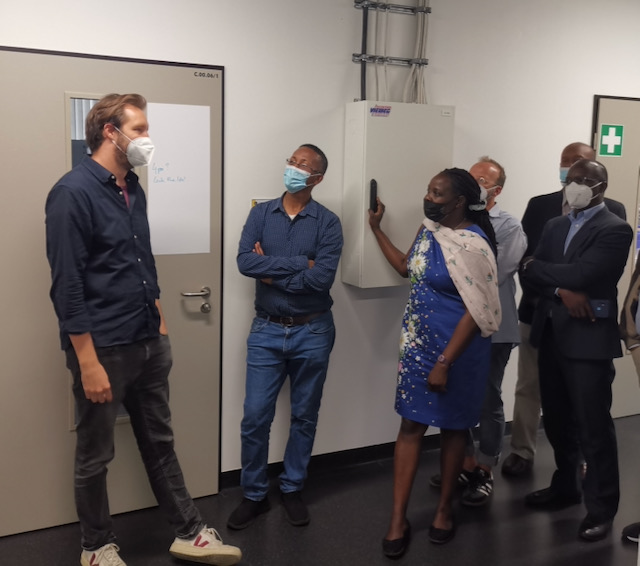
Our project partners from Addis Ababa University (AAU), Ethiopia and Gulu University (GU), Uganda visited us for a workshop from September 2-7, 2022.
From the InGrA perspective and the subproject “Building up a Graduate Program Hub” we visited the iDiv research center and it’s graduate school yDiv and exchanged ideas about supervision agreements. We also visited the MPI of Microstructure Physics and it’s International Max Planck Research School (IMPRS-STNS) and discussed aspects of good scientific practice.
The workshop overall focused on exchange, report on the progress of the project and possible future perspectives. The workshop has been coordinated by Dr. T. Weirowski.
The SILBERSALZ Institute’s year-long program is designed for scientists who would like to collaborate with artists to develop new cultural projects that broaden the public perception of science and bring scientific research into mainstream media.
The resulting projects could be documentary films, games, immersive or interactive work or sci/arts and cultural projects at the intersection of science, research, technology and society.
For its 2023 calendar, the Deutsche Forschungsgemeinschaft (DFG, German Research Foundation) is looking for photo motifs that refer to selected DFG-funded projects and is initiating a photo competition for this purpose:
Scientists from funded projects can participate, and the most beautiful twelve motifs will be selected for the calendar. The theme of this year’s calendar is “Research Landscapes”. The term is meant metaphorically and all participants are welcome to interpret it broadly. The deadline for entries is September 15, 2022.
Further information at the DFG website (in German).