Das Internet bildet für wissenschaftliche Texte eine große Reichweite. Wie verhält es sich mit dem Urheberrecht im Internet? Gibt es eine Vergütung für urheberrechtlich geschützte Texte im Internet?
Das Webinar bietet eine kurze Einführung in die Thematik an. Die Dozentin, Frau Wagner, stellt den zugehörigen Aufgabenbereich METIS (Meldesystem für Texte auf Internetseiten) der VG Wort vor. Weiterführend werden die Schritte, um an den Ausschüttungen der Verwertungsgesellschaft Wort (VG Wort) zu partizipieren, erläutert.
1. Dec 2020
VG Wort – aus Text wird Geld (09. Dezember 2020| online)
24. Nov 2020
Calls for women’s funding 2021 at MLU
Calls for women’s grants at MLU are online.
Current announcements:
- Network funds for the promotion of young female researchers in 2021: female doctoral students, postdocs, post-doctoral students, post-doctoral lecturers and junior professors can apply for funding for participation in conferences and further education measures as well as for working group meetings/research stays in 2021
- Funds for graduate assistants: Support of female post-docs in research and teaching
- MINT tutor resources: Application for the establishment of additional MINT study programs by female students in SoSe 2021 and WS 2021/22: The costs of tutorials, workshops, working groups, etc. in MINT subjects can be subsidized if female students conduct or participate in them. Attention: There will only be one call for proposals per year. Please plan your study programs accordingly for the long term.
- Adaptation measures maternity/family leave: for (doctoral) students, MLU supports individual adaptation measures according to §§9, 13 MuSchG during pregnancy, breastfeeding and after childbirth in case of individual or job-related restrictions. Applications can be submitted at any time.
- UniBund Mentoring Program for Post-Docs: As an advanced post-doctoral researcher, post-doctoral lecturer, junior researcher or junior professor, you will be given the opportunity to be individually accompanied and supported in your academic career by experienced mentors. Application period until 28.02.2021.
Please find the calls for proposals and application forms on the website.
Applications can be submitted to the Diversity and Equal Opportunities Office by e-mail by 15.01.2021 at the latest.
23. Nov 2020
Theory and Design of Scientific Posters (December 08, 2020| online)
Content
The workshop covers different aspects of scientific posters as increasingly popular form of presentation in various scientific disciplines. As an introduction, the poster as communication medium is described, with special attention to the differences among the disciplines. Several case studies and settings will be presented and discussed. The participants of the workshop are therefore explicitly invited to contribute their own work and material to this discussion. The second part focuses on how to create effective and attractive posters. Starting from the essential technical knowledge of poster ingredients such as pixel vs. vector graphics, typography, colours, etc., different software applications for creating posters are presented and optionally used for initial designs. In addition to basics in design and layout principles for text and image content, several approaches for reducing bulky content and visual complexity will be presented. Finally, the production step as well as the oral presentation itself will be addressed.
[ Read On … ]20. Nov 2020
KI-Camp 2021 + KI-Newcomer / AI newcomers (April 27, 2021)
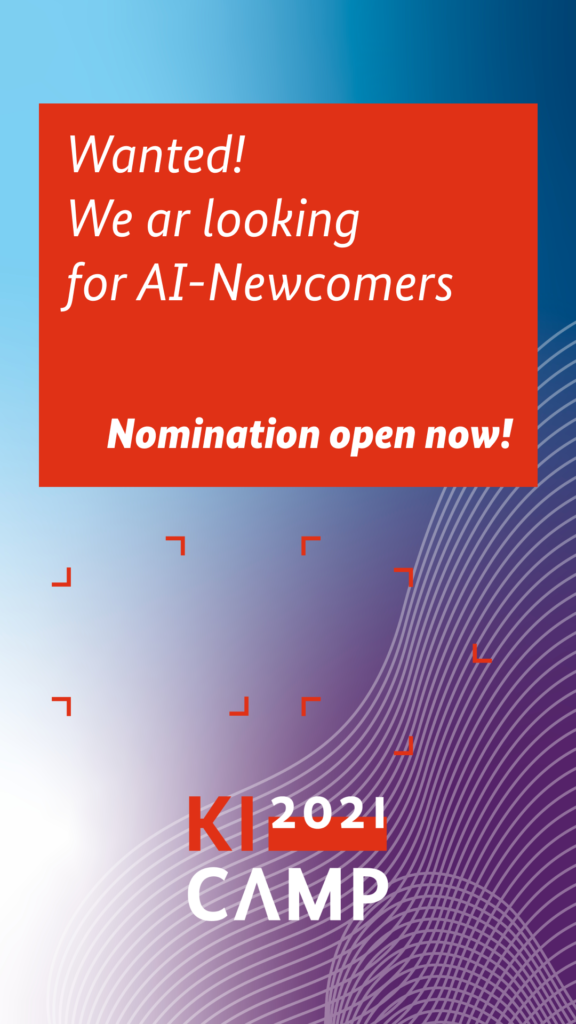
BMBF and German Informatics Society (GI) are currently organizing the KI-Camp 2021 on April 27, 2021, which might be interesting for the AI researchers of all disciplines.
[ Read On … ]13. Nov 2020
Funding for research training group “ProMoAge” extended
The Research Training Group 2155 “ProMoAge – Protein Modification: A Key Mechanism for Ageing” can continue its work for another four years. The DFG is funding the second phase with approximately 5.5 million euros. The GRK is managed by the Medical Faculty of the MLU together with the Friedrich-Schiller-University Jena.
11. Nov 2020
Research Training Group | Beyond Amphiphilicity: Self-Organization of Soft Matter Via Multiple Noncovalent Interactions (GRK 2670)
Spokesman: Prof. Dr. Dariush Hinderberger, coordinator: Dr. Imme Sakwa-Waltz
funding period 2021-2030 by DFG; website
About the doctoral program
Amphiphilicity is a well-established qualitative concept contributing to the understanding of self-assembly processes of molecules composed of two inherently incompatible units (hydrophilic and hydrophobic) in aqueous systems. Polyphilic molecules are more complex molecules, from small molecules to macromolecules, that have interaction patterns with at least two types of interactions, one of them based on amphiphilicity. Self-assembled soft matter systems attain their complexity through noncovalent interaction patterns of their molecular constituents with their environment, solvents, biomolecules, membranes, and surfaces.
[ Read On … ]10. Nov 2020
DFG approves new Research Training Group “Beyond Amphiphilicity” at MLU
The Senate of the German Research Foundation (DFG) decided on Friday to establish the new Research Training Group “Beyond Amphiphilicity: Self-Organization of Soft Matter Via Multiple Noncovalent Interactions (GRK 2670)” at MLU. In the first funding phase until 2025, about 4.5 million euros will be available for the doctoral program.
(from MLU press release No 157/2020 from November 9, 2020)
About GRK 2670
Research Training Group “Beyond Amphiphilicity: Self-Organization of Soft Matter Via Multiple Noncovalent Interactions (GRK 2670)” spokesperson: Prof. Dr. Dariush Hinderberger (funding 2021-2025) (link)
Amphiphilicity is a well-established qualitative concept contributing to the understanding of self-assembly processes of molecules composed of two inherently incompatible units (hydrophilic and hydrophobic) in aqueous systems. Polyphilic molecules are more complex molecules, from small molecules to macromolecules, that have interaction patterns with at least two types of interactions, one of them based on amphiphilicity. Self-assembled soft matter systems attain their complexity through noncovalent interaction patterns of their molecular constituents with their environment, solvents, biomolecules, membranes, and surfaces.
[ Read On … ]9. Nov 2020
Open Educational Resources (November 11, 2020)
During this final webinar, the Open Educational Resources (OERs) of the MLU will be presented. What are these materials, how can these be used properly, where can you find these, and what legal matters do you need to bear in mind if you create OERs are some of the topics that will be discussed. Get to ask all your OER questions to our expert!
Date, time and format
- Date and time: November 11, 2020 at 1 pm
2. Nov 2020
MENTAL HEALTH LITERACY TALK – online (November 12, 2020)
This lecture is about the prevalence of mental health illness in general and academic populations, about signs and symptoms and the science underlying the causes and treatments of mental illnesses, with an emphasis on depression and anxiety.
Our speaker will be Wendy Marie Ingram, PhD. She is a scientist, mental health advocate, consultant and speaker. She is a Founder and CEO at Dragonfly Mental Health, a Global Consortium for Academic Mental Health, established in 2019.
The talk will cover the following topics:
- the prevalence of mental health illness in general and academic populations
- an overview of signs and symptoms highlighting those seen in academic settings
- the science underlying the causes and treatments of mental illnesses, with an emphasis on depression and anxiety
- what to do and when to get help